Impact
Application creation speed
Increased by 30%
Application close rate
Increased by 40%
Customer satisfaction score
Increased by 15%
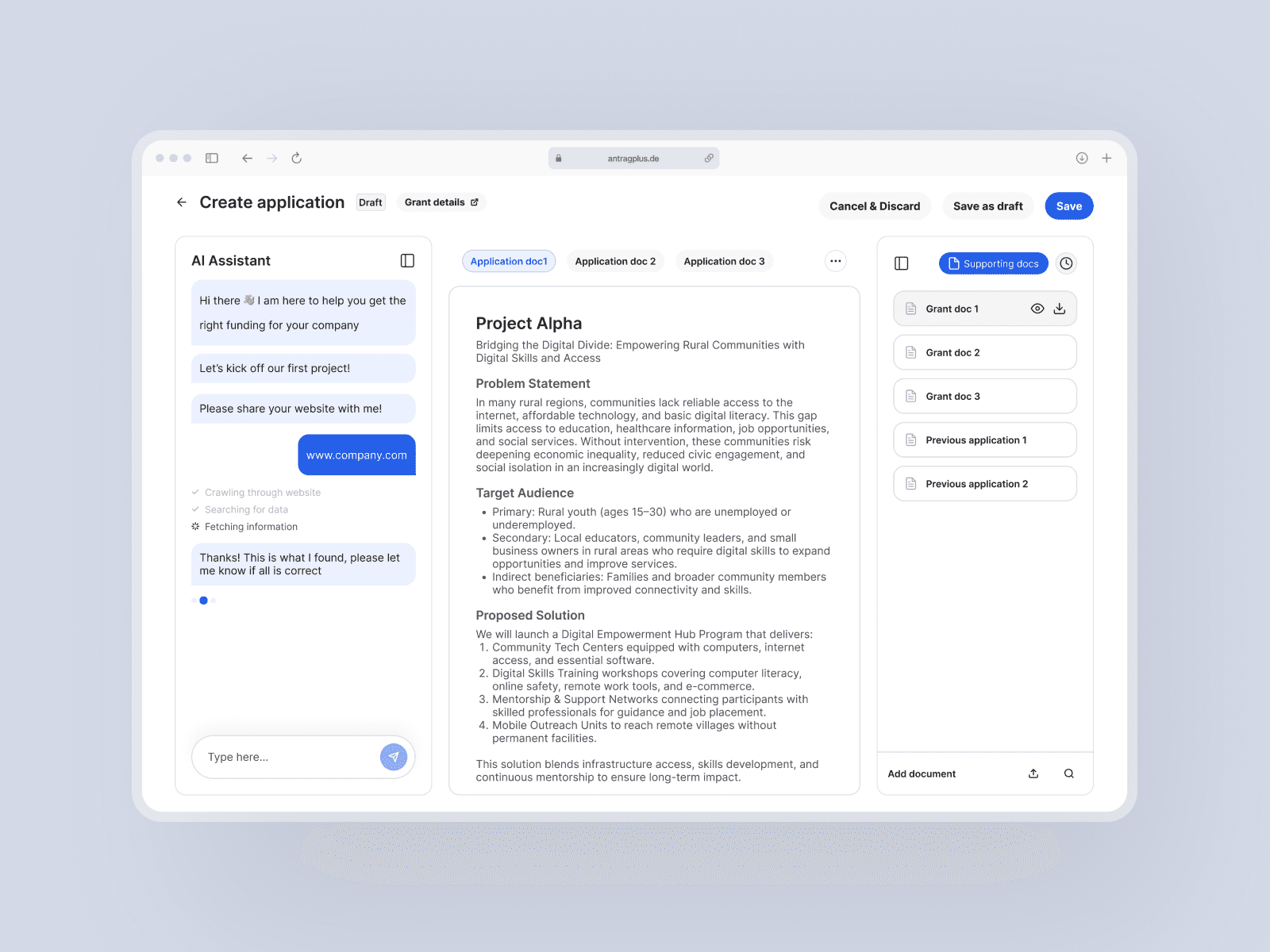
Putting technicality as ease for non-technical users
Writing grant application documents for NGOs and confirming them through email takes weeks if not months. This design, brought was I was envisioning for AntragPlus to life. Clean, AI-Native, and Beautiful.
Robert Tepass
Founder at AntragPlus
Writing the write application document for the NGOs is a pain. That's why they outsource the task to grant writers. But they have to pay the writers upfront, without knowing if they are going to take the grant. The NGOs can't also use tools like ChatGPT or Clause, as they don't support long-term memory and can't process large data across multiple NGO profile.
AntragPlus had a vision: enabling the NGOs to be able to write the grant documents with the help of an AI assistant.
Discovery: Understanding Customer Journey
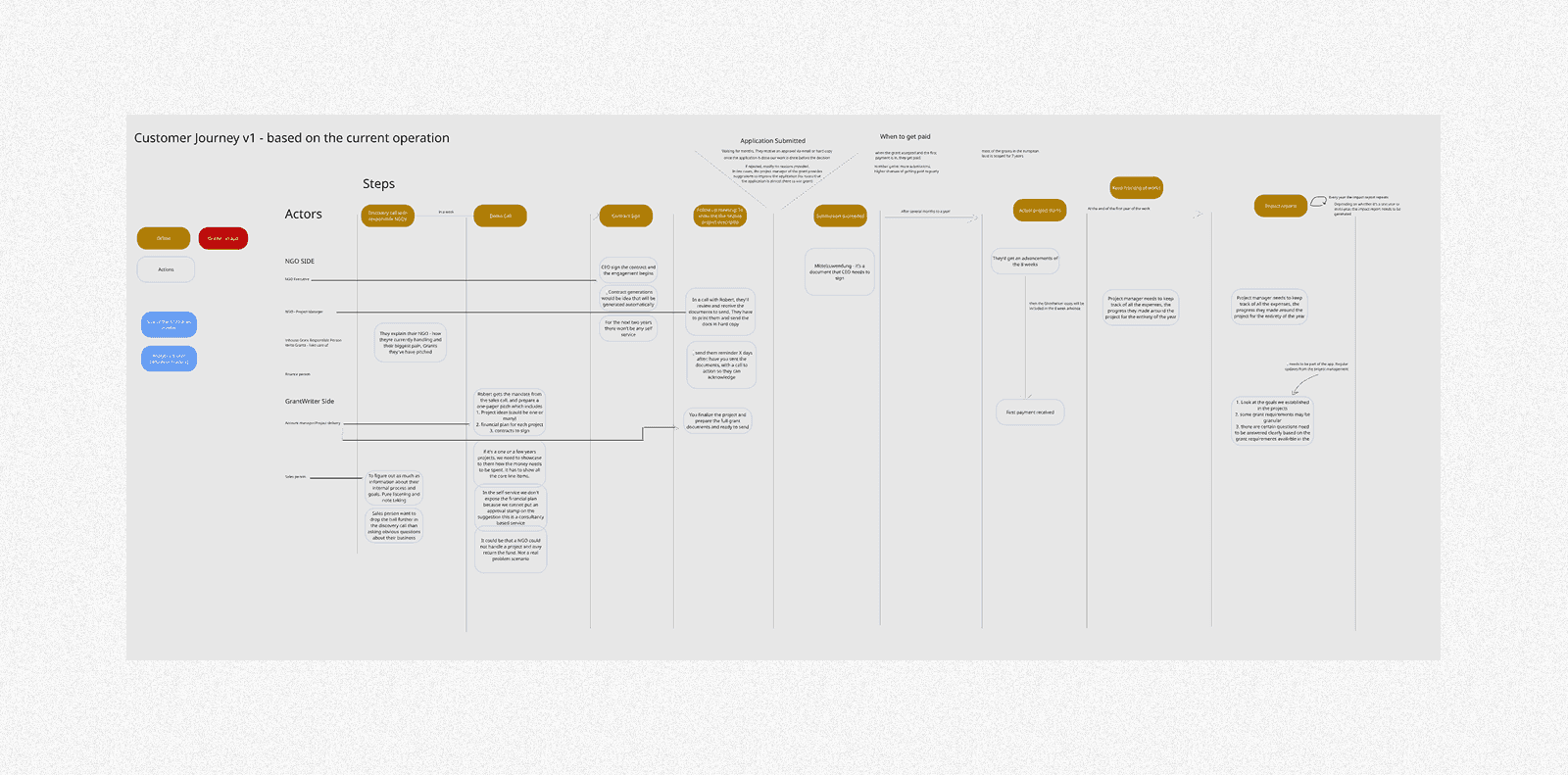
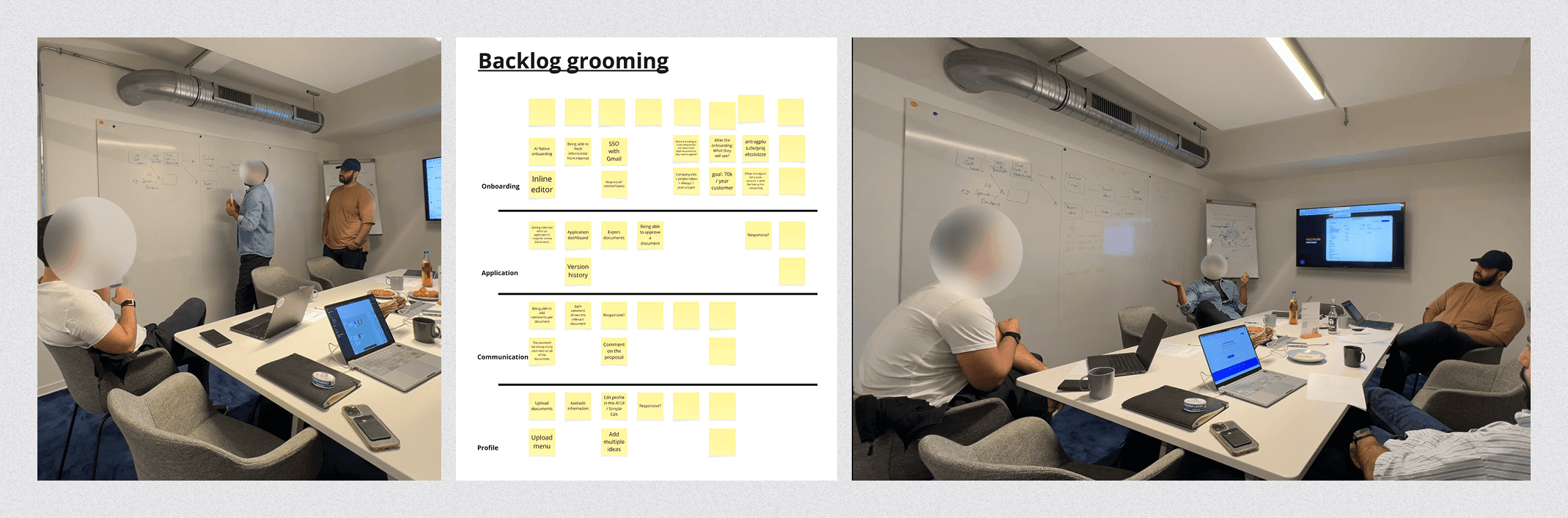
To understand the journey of the grant application and approval, I held a workshop to define the customer journey. That enabled me to define the friction points in the journey, which were application writing, and application review.
Afterwards, I also had interviews with 4 selected NGO employees to discuss further their challenges in the friction points.
Discovery: Scoping the Project
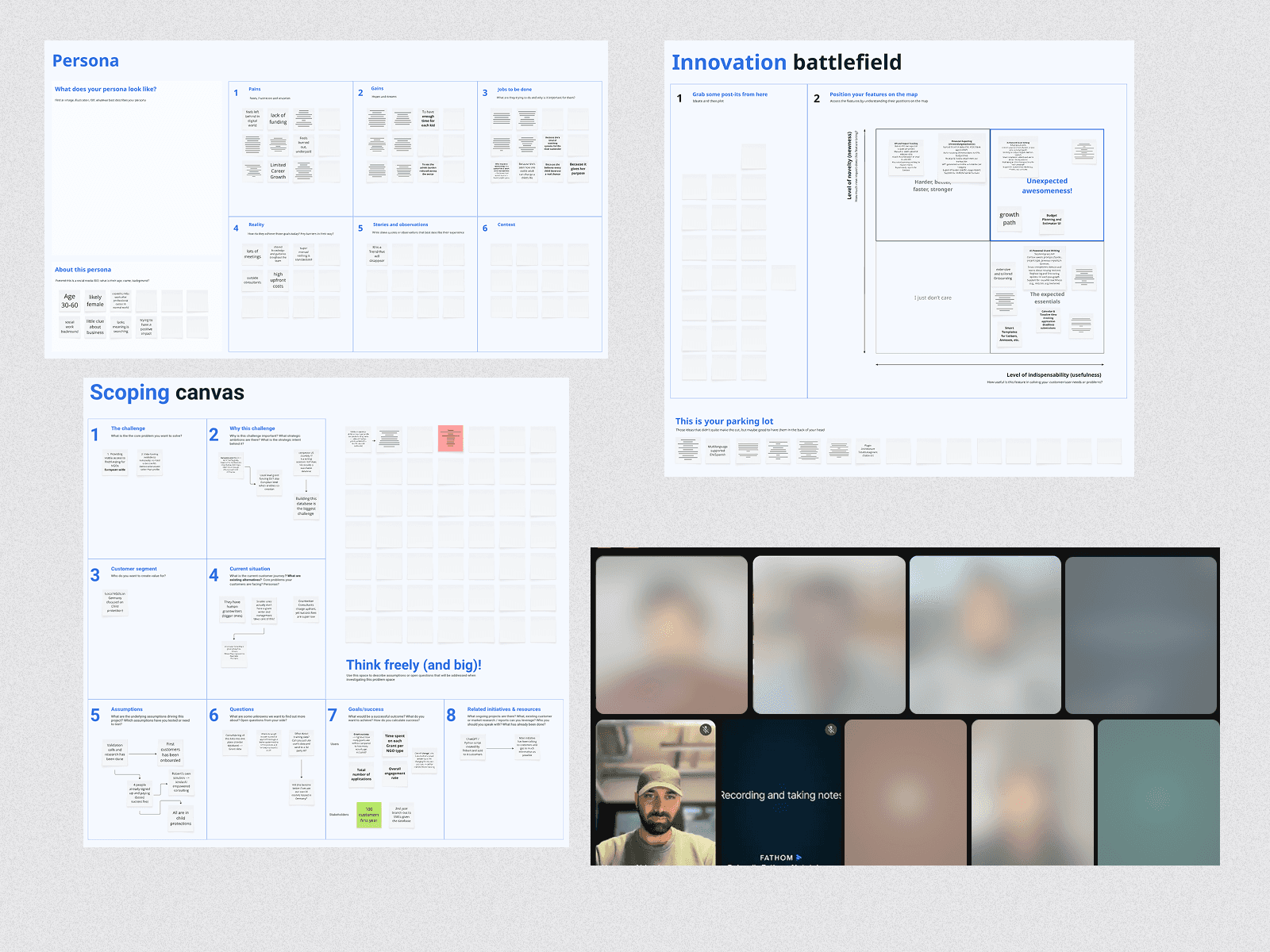
The product needed to be built from scratch. To define the product roadmap, I held a discovery workshops to define the product and design strategy. The participants of the workshop were the founders, the Product Manager, and the CTO.
The User Stories
After defining the core features, I wrote the user stories and their success criteria for design and started building the userflows accordingly.
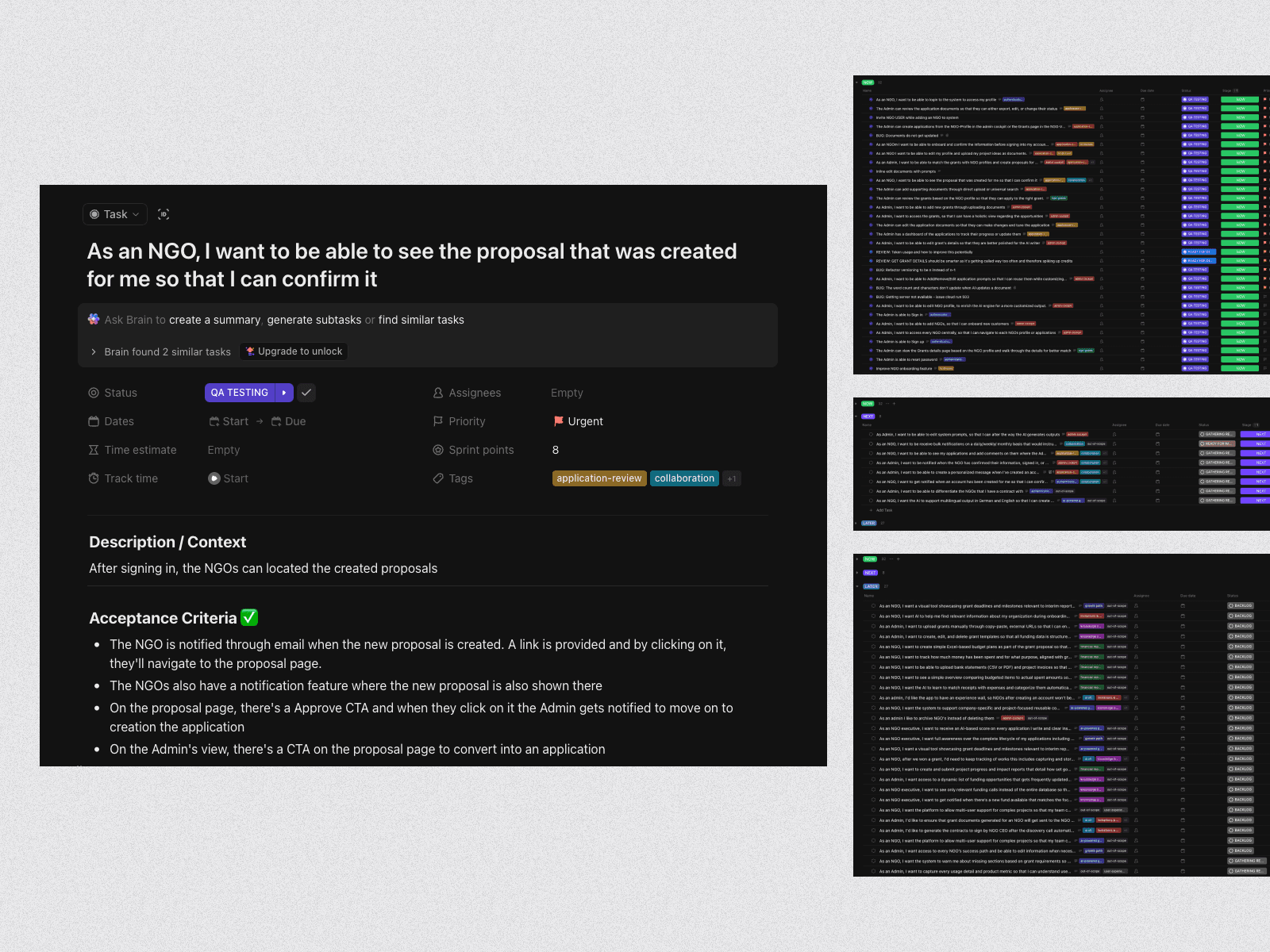
Every two sprints, I held a sprint planning with the stakeholders to assure the team is focused on the right priorities and change focus in
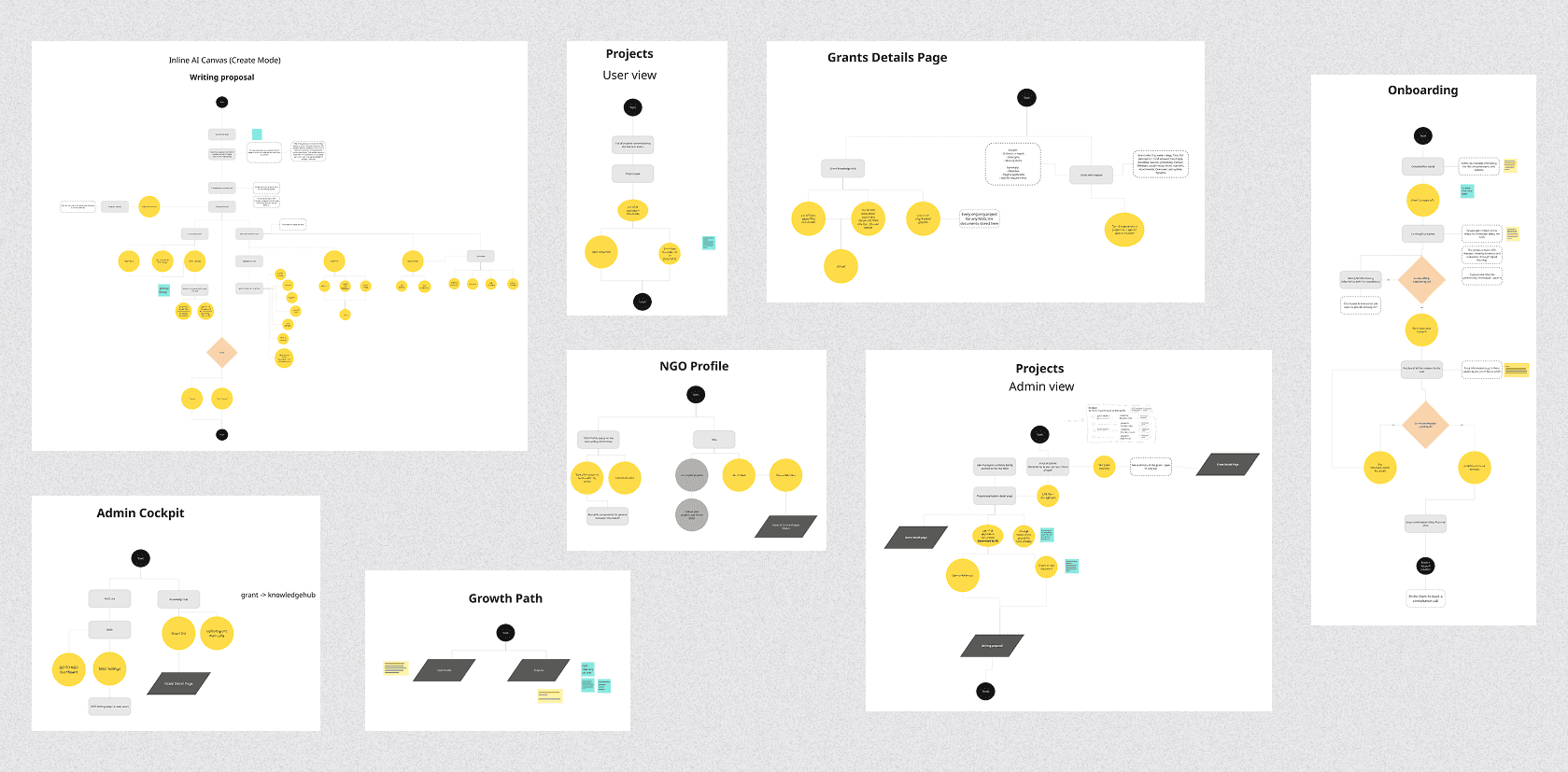
Based on the user stories, I started to design the userflows and shared them internally with stakeholders to assure the team is aligned and the feedbacks are gathered.
Wireframing
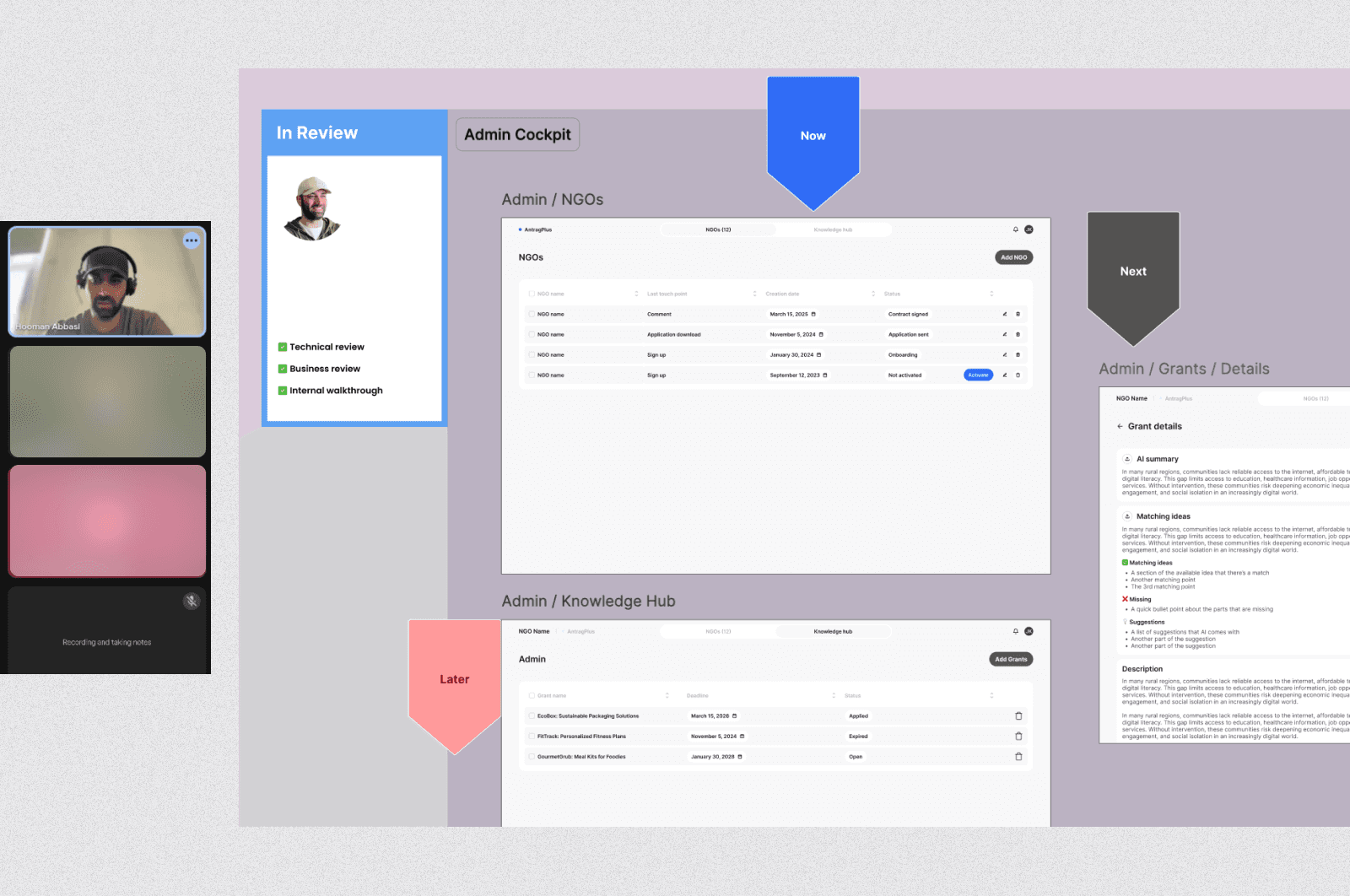
I structured the designs based on epics, and flows, so that they are easy to follow and feedback gathering by the team.
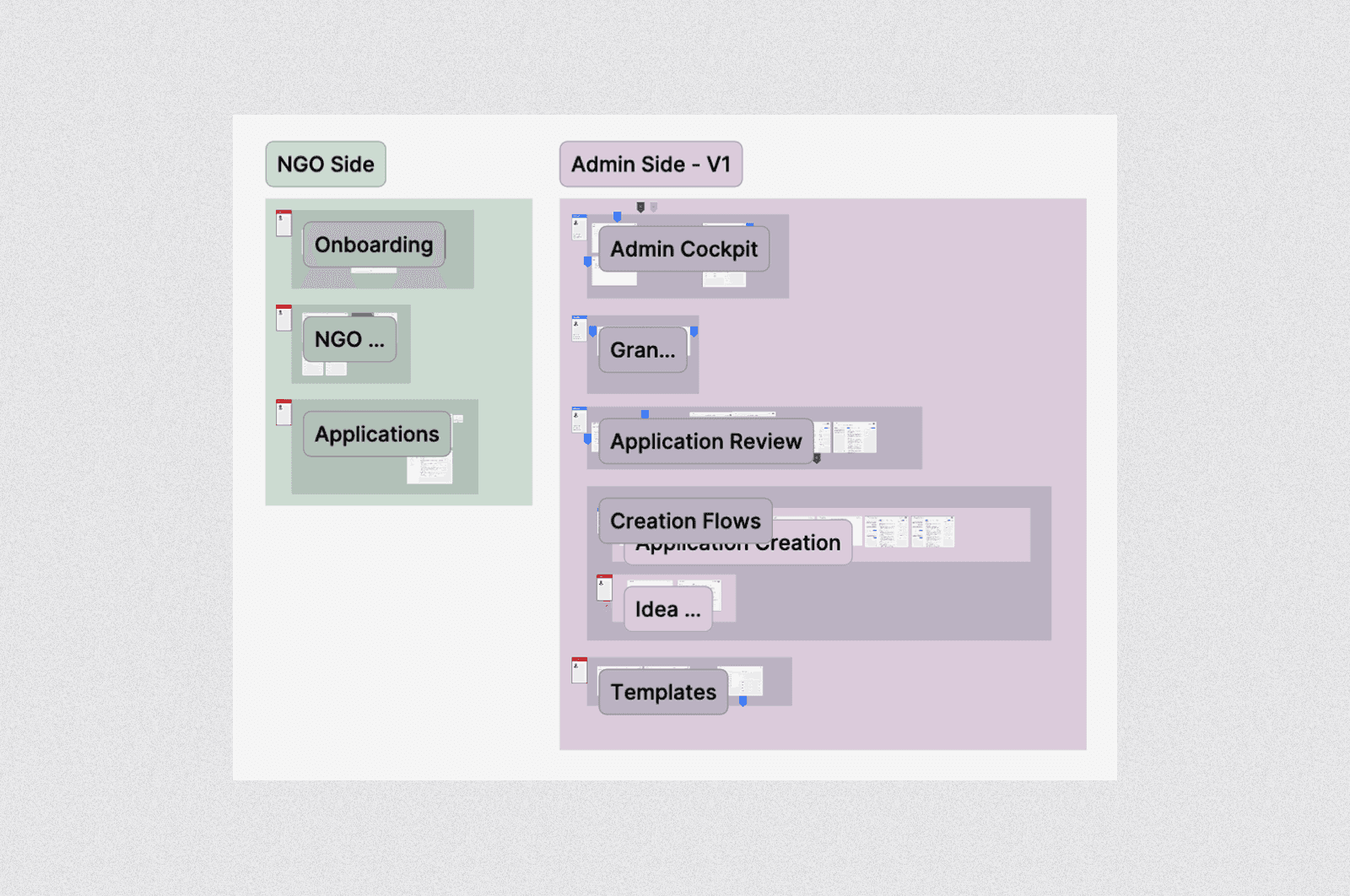
I reviewed each flow with technical and business stakeholders, and ran an internal walkthrough amongst other designers in feedback sessions as well. I After the feedback sessions with the team.
Solution: The AI Native Approach
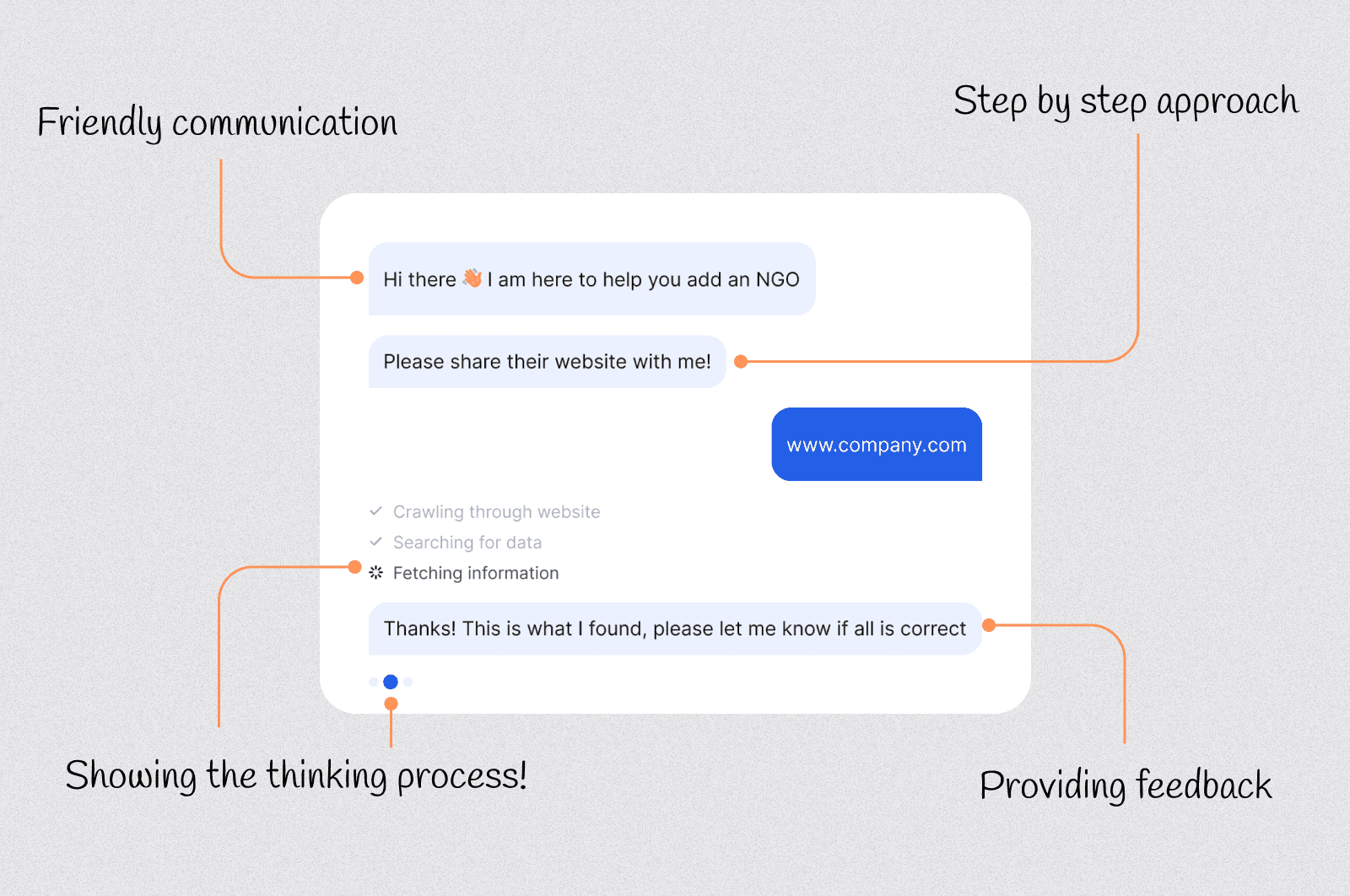
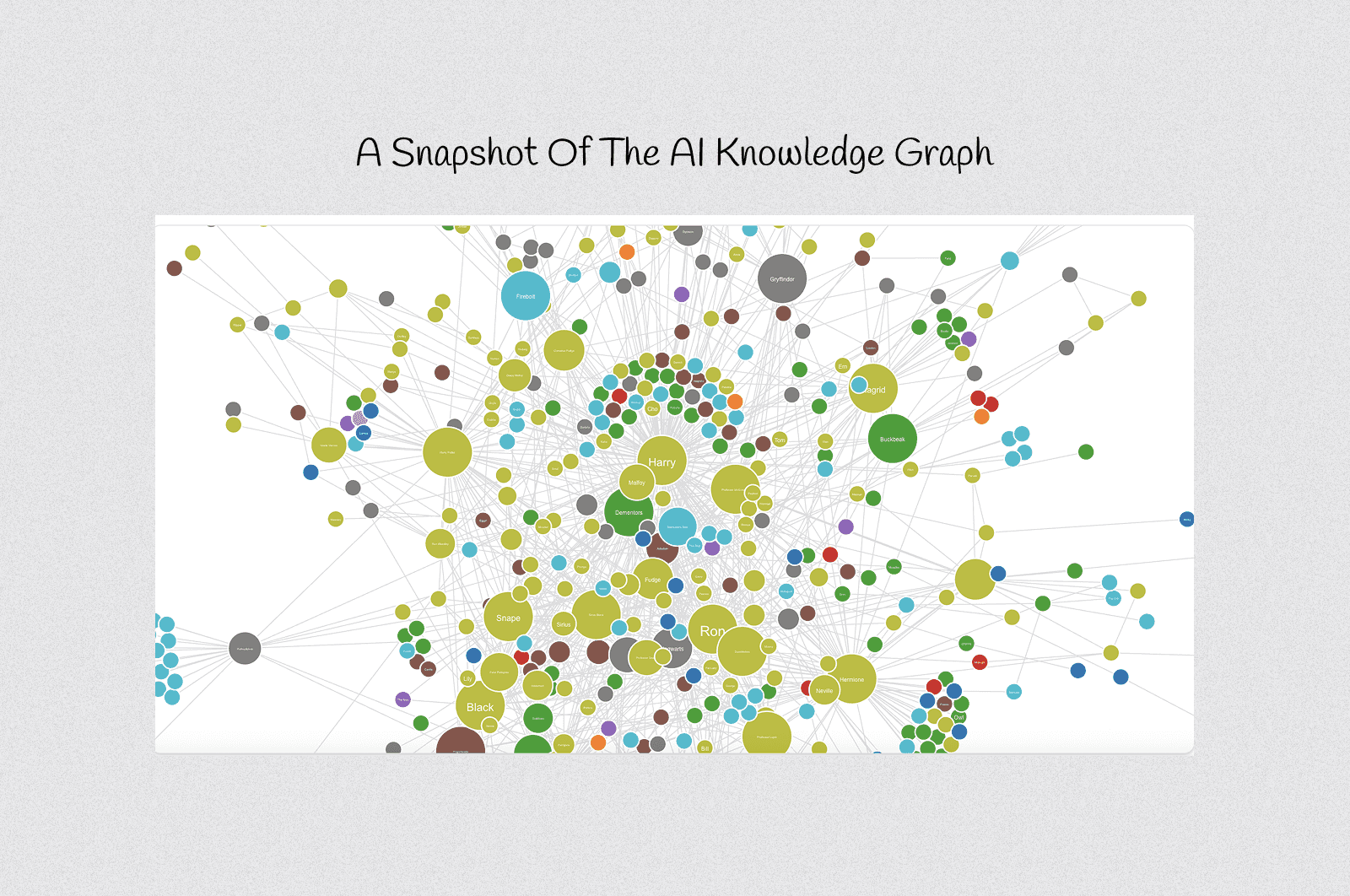
In the initial discovery workshop, our strategy was to build an AI native solution. To to that, I set the design strategy to consider the touch-points, where an AI UI could come in.
Vibe Coding The Prototype
I created the prototypes on Figma Make, which gave me the advantage of usability testing as well as receiving constructive feedback from stakeholders as they were able to experience the journey in an interactive prototype.
The other advantage was that, I worked with the front-end developers and using, Figma MCP, the UIs of the screens were created. This left no chance for inconsistency reworks!
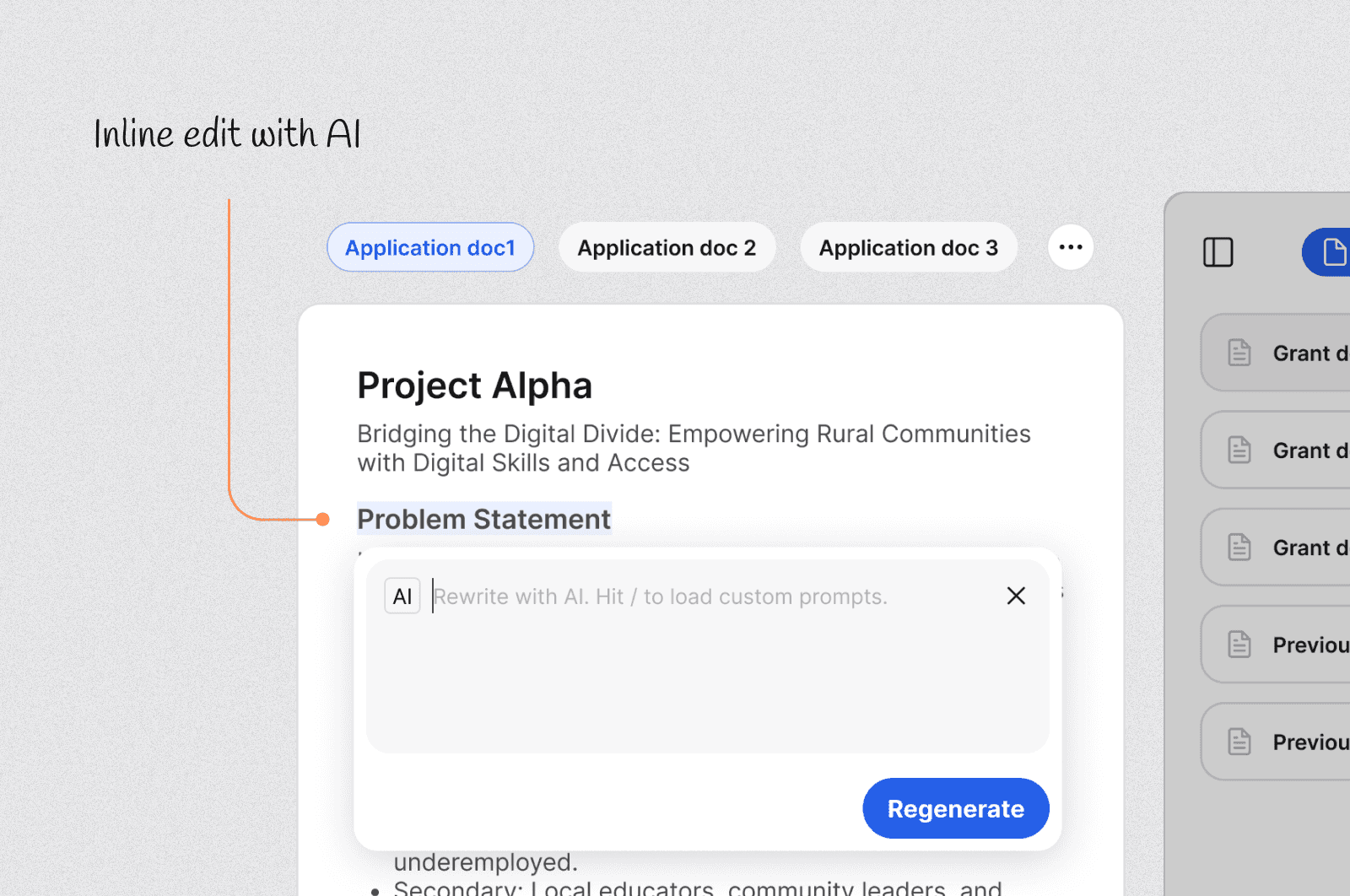
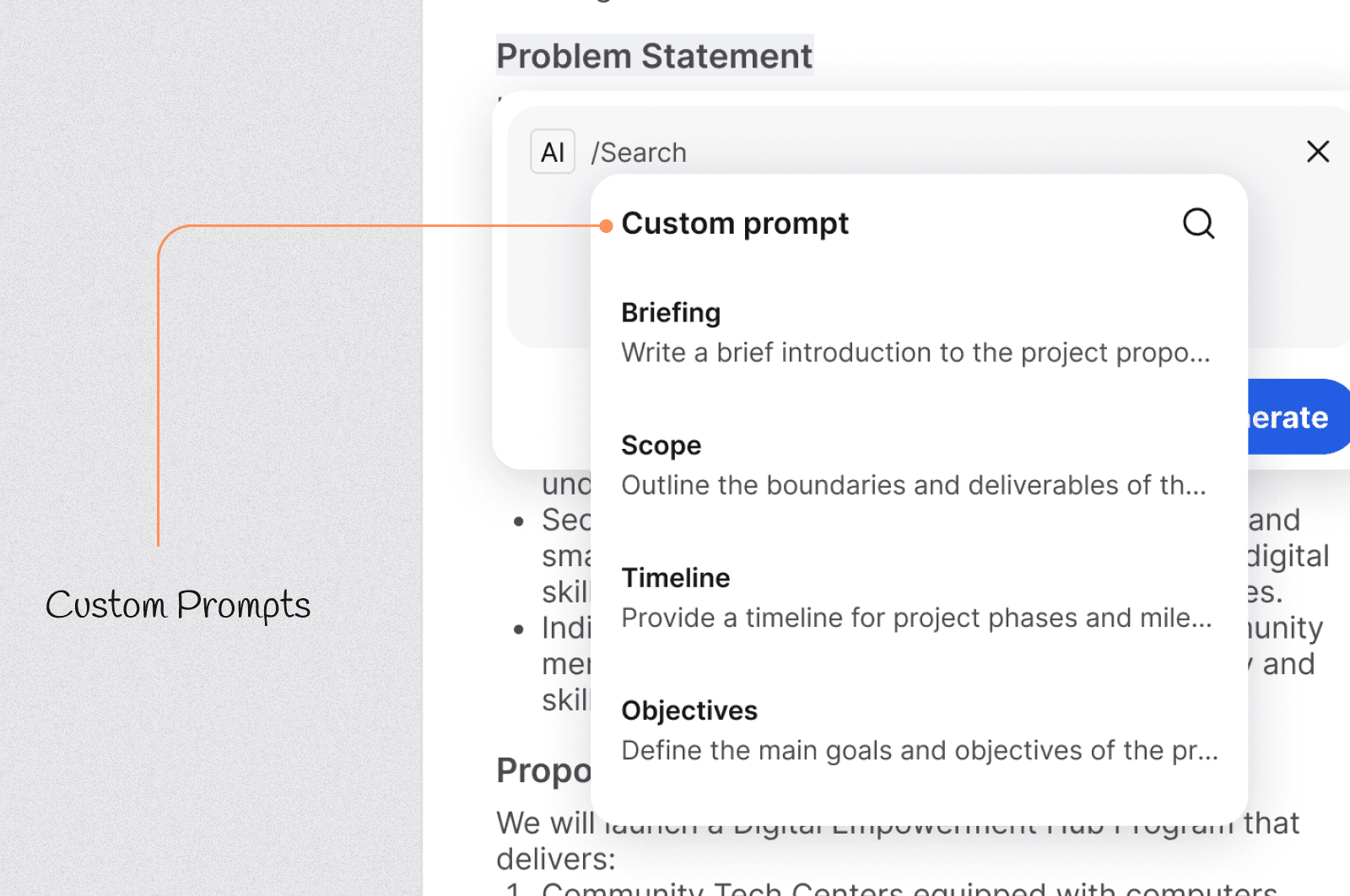
AI Feature: Inline Edit, and Custom Prompts
Gathering feedbacks
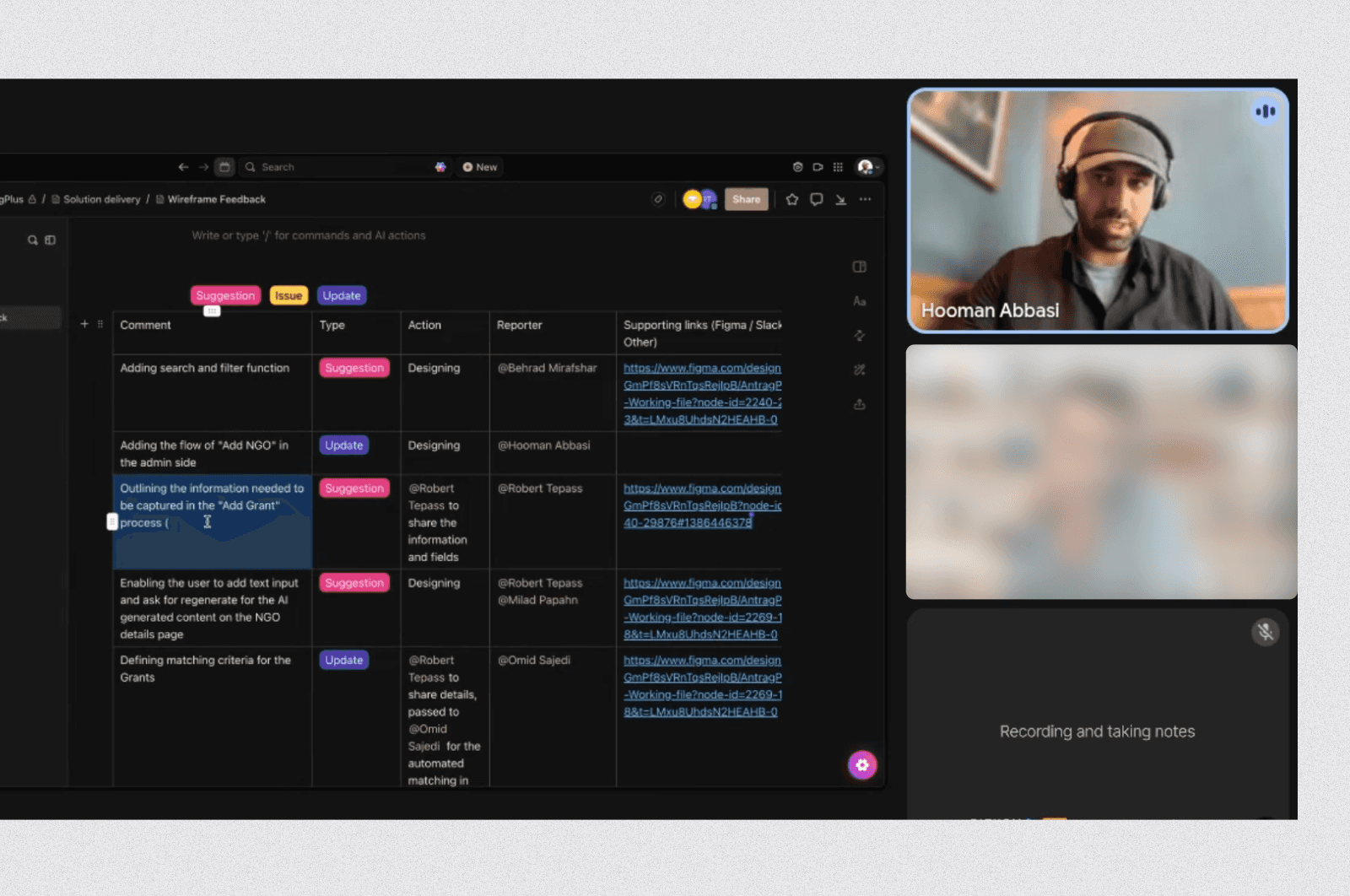
For the feedback rounds, I created a space, where the stakeholders added their feedback. I categorized the feedbacks in Update, Suggestion, and Issue, to better understand the situation and prioritize the changes.
Impact
Application creation speed
Increased by 30%
Application close rate
Increased by 40%
Customer satisfaction score
Increased by 15%